Multi Channel Temperature Logger Explained: A UK Buyer's Guide
Multi Channel Temperature Logger Explained: A UK Buyer's Guide
A multi channel temperature logger is a device that measures and records temperatures from several probes at the same time, making it easier to compare different locations, spot faults and keep a reliable time-stamped record. For UK buyers, it is commonly used for HVAC checks, catering compliance, maintenance diagnostics, laboratory monitoring and process testing.
TL;DR: If you need to monitor more than one temperature point at once, a multi channel temperature logger gives you faster comparisons, clearer trend data and better traceability than single-point checks. In most UK workplaces, a 4-channel K-type thermocouple logger is a practical choice because it balances cost, flexibility and straightforward data logging.
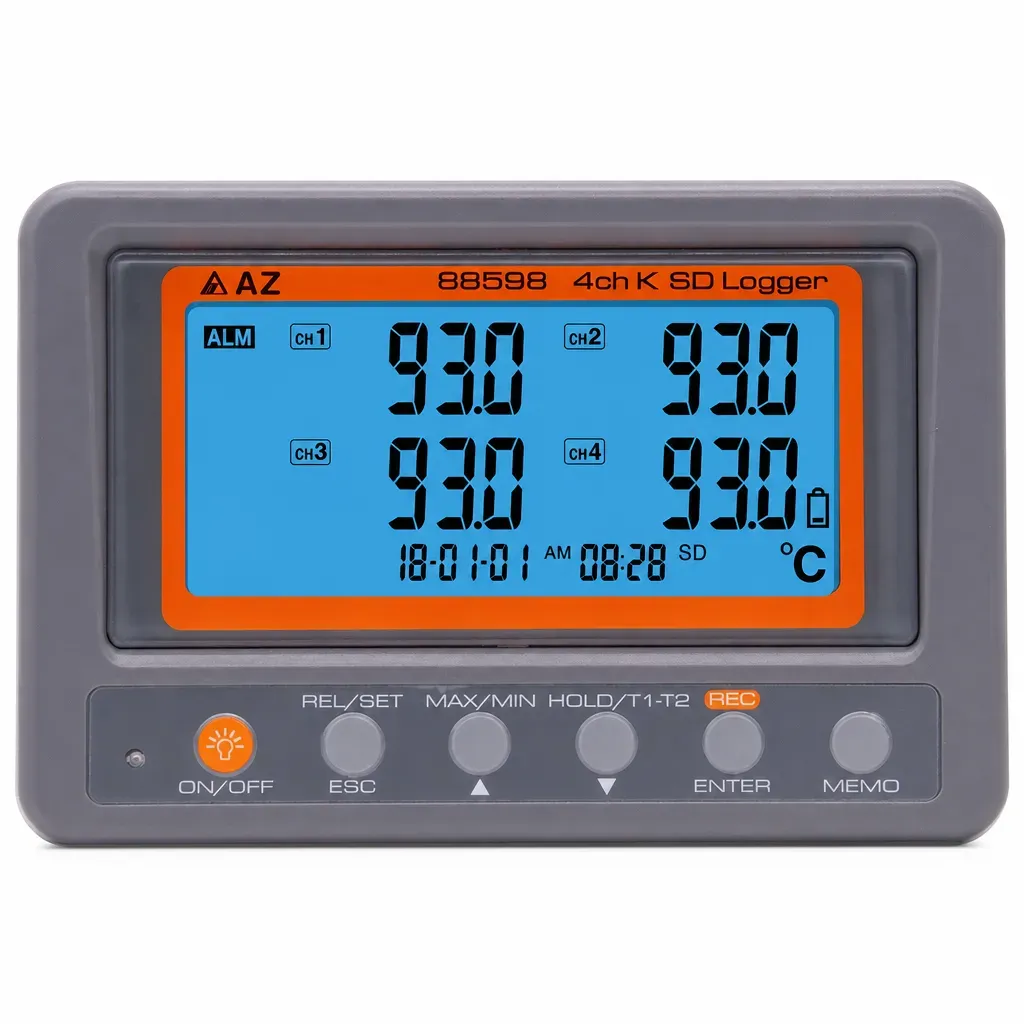
ChannType’s core product focus reflects that need: a 4 Channel Thermocouple Thermometer & Thermocouple Data Logger built to monitor four K-type points at once with SD logging, alarms and ready-to-use probes. As a result, buyers can get from setup to usable records with less delay and less manual note-taking.
This guide explains what a multi channel temperature logger does, where it fits, which specifications genuinely matter, and how to choose a model that is practical for British workplaces rather than impressive only on a spec sheet.
What Is a Multi Channel Temperature Logger?
A multi channel temperature logger records temperature from several probe inputs at the same time, allowing you to compare trends across multiple locations or assets in one dataset.
For many UK buyers, a 4-channel K-type thermocouple logger is a practical balance of flexibility, speed and cost, especially for diagnostics, process checks, HVAC, catering checks and maintenance work.
Useful buying criteria include channel count, probe compatibility, logging interval, alarm functions, SD or file export options, accuracy, operating range and ease of reviewing data later.
Recorded data supports traceability and troubleshooting. Consequently, it is especially useful in environments where evidence, not memory, is needed to show what happened and when.
What does a multi channel temperature logger do?
A multi channel temperature logger is an instrument that measures and stores temperature readings from more than one input channel simultaneously. Each channel connects to its own probe, so the unit can track several measurement points during the same time period.
In practical terms, instead of walking between locations with a single handheld thermometer and writing readings down one by one, you connect multiple probes and let the logger build a time-stamped record automatically. As a result, you can see whether temperatures rise together, diverge, stabilise, or cycle at different rates.
For ChannType’s product category, the emphasis is on a 4 channel thermocouple thermometer and data logger. Four inputs are often enough to cover the most common comparison tasks without adding unnecessary complexity. For example, one probe might sit at an air inlet, another at an outlet, another on a pipe surface and another in the ambient room environment, all logged in a single session.
Why do multiple channels matter?
Single-point measurement is useful for spot checks. However, multi-point logging is far more useful for diagnosis. If you need to understand temperature distribution, heat loss, thermal lag or process consistency, multiple channels make the result much more meaningful.
- Compare input and output temperatures at the same moment
- Monitor different zones within one appliance or enclosure
- Track product, surface and ambient conditions together
- Create a logged record for later review or reporting
How is a thermocouple logger different from a basic thermometer?
A basic thermometer gives a reading. A thermocouple logger gives readings over time. When that logger is multi channel, it also adds comparison across several locations. Therefore, it becomes much more useful for fault-finding, trend analysis and process checking.
Why would UK buyers use a multi channel temperature logger?
Across the UK, teams are under pressure to show consistency, respond quickly to faults and keep usable records. Based on our testing and day-to-day experience with temperature instrumentation, buyers are usually not looking for a gadget. Instead, they are trying to solve a specific problem: too many measurement points, not enough time, and no dependable record when something goes wrong.
That problem appears in very different sectors. For instance, a catering operation may need to compare holding temperatures across equipment. A facilities engineer may be checking heating performance across several pipes or outlets. A laboratory technician may need time-based data rather than isolated readings. Likewise, a maintenance contractor may be tracing a recurring overheating issue that only appears after several hours.
UK organisations also work in a compliance-conscious environment. The NHS, local authorities, food businesses, contractors and education settings all tend to favour tools that support traceability, documented checks and repeatable procedures. A logger does not create compliance by itself; however, it does provide evidence that manual note-taking often misses.
Why is record-keeping important in UK settings?
According to UK food safety guidance, chilled food should be kept at 8°C or below by law in England, Wales and Northern Ireland, while recognised good practice commonly targets 5°C or colder where possible to maintain food safety margins. Source: Food Standards Agency guidance on chilled food temperature control.
That does not mean every buyer needs the same logger or setup. Even so, it shows why reliable temperature records matter. In any setting where temperature affects safety, quality or equipment performance, logged evidence is stronger than memory or occasional handwritten checks.
How does a 4 channel temperature logger work in practice?
A typical 4-channel logger accepts four thermocouple inputs, usually K-type in this product category. Each connected probe measures temperature at its own location. The logger samples those inputs at set intervals, displays live readings on screen, and stores the data for later retrieval, often to SD card or a comparable export method.
ChannType’s product narrative centres on exactly that practical setup: monitor four K-type points at once with SD logging, alarms and ready-to-use probes. Therefore, the device is not just measuring; it is helping you get from setup to usable evidence with less friction.
What is the typical workflow?
- Position the four K-type probes at the points you need to monitor.
- Assign or note what each channel represents, such as inlet, outlet, core, or ambient.
- Set the logging interval based on how quickly temperatures are expected to change.
- Start the recording session and watch for any alarm thresholds.
- Review the stored data to compare behaviour across all four channels over time.
Why is SD logging useful?
SD logging remains popular because it is simple and familiar. Many UK teams prefer a removable storage method that can be reviewed later without relying on a permanent software connection. In addition, it supports straightforward record-keeping for audits, maintenance logs and internal reporting.
What should you look for in a multi channel temperature logger?
Not every specification matters equally. In practice, the right model depends on what you are measuring, how often you need records and how easy the logger is to use in the field. Based on our testing, buyers usually get better results by focusing on practical fit rather than the longest feature list.
How many channels do you need?
For many UK users, four channels are enough. That covers most comparison tasks in catering, HVAC, plant maintenance and bench testing. If you regularly monitor only two points, four channels still leave room for ambient reference or extra diagnostics without making the instrument unwieldy.
Which probe type is best?
K-type thermocouples are widely used because they offer a broad temperature range, good flexibility and sensible running costs. For general industrial and commercial work, they are often the most practical option. However, the best probe style still depends on whether you are measuring air, liquid, surfaces or product core temperatures.
How important are logging intervals and alarms?
Logging interval matters because fast-changing systems need more frequent samples than slow-moving storage checks. Alarms also matter because they help users react before a problem goes unnoticed for too long. Therefore, a good logger should let you set intervals and thresholds that suit the application rather than forcing one default approach.
What about accuracy and temperature range?
Accuracy should be judged in the context of the actual job. For example, food holding checks, HVAC balancing and thermal diagnostics may all require different tolerances. Likewise, the stated temperature range needs to match the probes and the real conditions you expect to measure, not just the instrument headline figure.
How easy is the data to review later?
This point is often underestimated. A logger is only as useful as the records you can retrieve and understand later. Clear channel labelling, simple exports and readable stored data can save a great deal of time, especially when several people need to review the same job.
What is a multi channel temperature logger used for?
A multi channel temperature logger is used anywhere several measurement points need to be compared over time. Because it captures simultaneous readings, it is particularly useful when one temperature alone does not tell the whole story.
Common UK use cases
- Comparing flow and return temperatures in heating systems
- Checking refrigeration performance across different shelves or zones
- Monitoring catering equipment during service or validation checks
- Tracing overheating on motors, enclosures or process lines
- Recording ambient and product temperatures together during testing
- Supporting laboratory or workshop experiments with time-based data
When is a single-channel device not enough?
If the job depends on comparison, sequence or distribution, a single-channel device becomes limiting very quickly. For example, if one area overheats while another remains stable, you need simultaneous readings to see that relationship clearly. Otherwise, manual spot checks can miss the timing entirely.
How do you choose the right multi channel temperature logger in the UK?
The best choice is usually the one that fits your day-to-day work without slowing it down. Therefore, UK buyers should look at setup time, probe suitability, data access and whether the device can produce records that stand up in real operational use.
A 4-channel K-type logger is often the sensible middle ground. It gives enough inputs for meaningful comparison, yet it remains simpler and more affordable than larger systems that many teams never fully use.
Questions to ask before buying
- How many points do I genuinely need to monitor at the same time?
- Am I measuring air, surfaces, liquids, product core or a mix of these?
- Do I need alarms for live monitoring?
- Will I need exported records for audits, service reports or compliance checks?
- Will different team members need to use the logger without specialist training?
Frequently asked questions about multi channel temperature loggers
What is the benefit of a multi channel temperature logger?
The main benefit is comparison. You can measure several points at once, see how they behave over time and keep a proper record for troubleshooting, reporting or compliance support.
Is a 4 channel temperature logger enough for most jobs?
For many UK applications, yes. Four channels usually cover the most common needs in facilities management, catering, HVAC, maintenance and general testing without adding unnecessary complexity.
Are K-type thermocouples suitable for UK commercial and industrial use?
In many cases, yes. K-type thermocouples are widely used because they are versatile, durable and suitable for a broad range of temperature measurement tasks.
Final thoughts
A multi channel temperature logger is the right tool when you need more than isolated spot readings. It helps you compare temperatures properly, understand trends and keep evidence you can review later. In other words, it turns scattered measurements into something you can actually use.
For many British buyers, a 4-channel thermocouple data logger is the practical sweet spot. It is flexible enough for real diagnostic work, yet simple enough for routine checks across a wide range of UK workplaces.
Ready to try ChannType?
Shop Now — £134.99