The Ultimate Guide to 4 Channel Thermocouple Thermometer in the UK
The Ultimate Guide to 4 Channel Thermocouple Thermometer in the UK
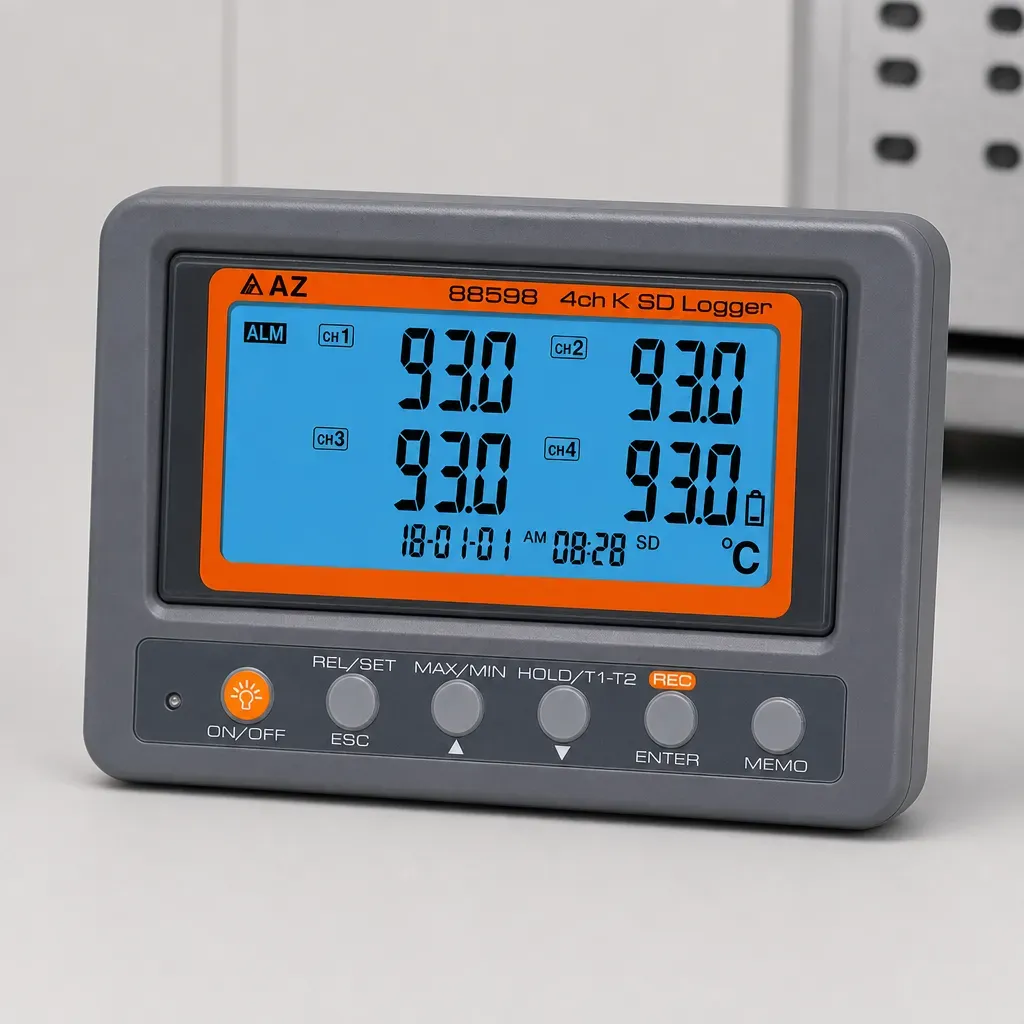
TL;DR: A 4 channel thermocouple thermometer is a digital meter that reads four temperatures at the same time, usually with K-type probes. It is useful for HVAC, facilities, catering, manufacturing and maintenance work because it helps you compare temperatures, spot faults faster and, in many cases, log readings for records and audits.
Key Takeaways
- A 4 channel thermocouple thermometer measures four separate temperature points at the same time, making it far more efficient than single-input meters for comparison work, fault-finding and process checks.
- In the UK, this type of instrument is widely used in facilities maintenance, HVAC, catering compliance, manufacturing, laboratories, plant rooms and healthcare support environments.
- For most buyers, the important features are K-type compatibility, wide temperature range, stable accuracy, fast response, alarms, SD or PC logging, and ready-to-use probes.
- Multi-point measurement helps reveal temperature imbalance, heat loss, overshoot and recovery time that a one-channel thermometer can miss.
- Choosing a logger-backed model with alarms and included probes can save time on site and reduce setup errors from day one.
A 4 channel thermocouple thermometer is a handheld or bench-style temperature meter that lets you monitor four probe inputs at once, so you can compare multiple points in real time instead of taking separate readings one by one. For UK users, it is especially useful in heating systems, catering checks, maintenance inspections and production environments where temperature differences matter as much as the temperature itself.
However, a temperature reading on its own is rarely the full story. In real working environments across the UK, engineers, facilities teams and technical staff often need to compare several points at once: flow and return on a heating circuit, inlet and outlet on a heat exchanger, ambient air against surface temperature, or four stages of a production process running together. That is exactly where a 4 channel thermocouple thermometer earns its place.
At ChannType, we focus on practical temperature instruments that solve real measurement problems, not just spec-sheet comparisons. Our main product message is straightforward: 4 Channel Thermocouple Thermometer & Thermocouple Data Logger. The value behind that message is equally clear: monitor four K-type points at once with SD logging, alarms and ready-to-use probes. Based on our testing of multi-point temperature workflows, that combination matters because it cuts setup time, improves visibility and gives you records you can review later rather than relying on handwritten notes.
This guide explains what a 4 channel thermocouple thermometer does, where it fits in British industry, what specifications actually matter, and how to choose a model that will hold up in day-to-day use. It is written for practical buyers: maintenance engineers, HVAC technicians, compliance managers, food operations teams, healthcare estates staff, workshop supervisors and serious technical users who need dependable measurements rather than marketing noise.
What is a 4 channel thermocouple thermometer?
A 4 channel thermocouple thermometer is a digital instrument designed to read temperature from four separate thermocouple probes at the same time. Each input channel receives data from its own probe, allowing the user to monitor multiple points simultaneously on one screen and, in many models, store or export those readings for analysis.
In the ChannType context, this usually means a meter built around K-type thermocouple probes, which are popular because they offer a broad temperature range, fast response and strong suitability for general industrial and commercial work. K-type probes are widely available in the UK, which also makes replacement and expansion more straightforward.
What separates a four-channel unit from a standard handheld thermometer is not just the number of inputs. Instead, it is the kind of work it enables. Rather than moving one probe between four test points and hoping conditions stay stable, you can capture all four temperatures together. As a result, the reading is far more meaningful when systems fluctuate, cycle or respond quickly to load changes.
How does a 4 channel thermocouple thermometer work?
Each thermocouple probe produces a small voltage related to temperature difference, and the instrument converts that signal into a readable value. A quality meter then displays the result per channel and may also provide minimum, maximum, average, differential views, alarms and logging. If the unit includes SD card logging or USB connection, the user can build a time-stamped record for audits, troubleshooting or trend review.
Why do four channels matter?
- Compare supply and return temperatures without moving probes
- Track multiple assets or zones during the same test
- Identify imbalance across a system
- Monitor temperature change over time at several locations
- Reduce the chance of recording errors from manual switching
What is a 4 channel thermocouple thermometer used for?
British workplaces often deal with ageing building stock, mixed heating systems, variable seasonal demand and increasingly documented maintenance standards. In that setting, a single-point instrument can be limiting. By comparison, a four-channel thermometer gives technicians and managers better evidence, especially where comparison is more useful than one isolated temperature figure.
Take a common plant room example. A facilities engineer in a school, surgery or office block may need to confirm whether a heating circuit is balanced properly. Reading one pipe at a time is slow and vulnerable to changing boiler behaviour. Reading four points at once gives a live comparison: flow, return, ambient air and cylinder surface, for example. Consequently, diagnosis is faster and often more credible when results are shared with colleagues or contractors.
Across hospitals and NHS-linked estates, temperature monitoring can also support broader environmental and equipment checks, though the exact application depends on local protocols and device suitability. The NHS remains one of the largest employers in the UK, with over 1.3 million full-time equivalent staff in England alone according to NHS England workforce statistics, which underlines the scale of estates, maintenance and support operations where robust measurement tools matter. Source: NHS England, monthly workforce statistics.
Food businesses, bakeries, commercial kitchens and catering operations also benefit. According to UK food safety expectations, operators need reliable temperature checks and consistent records as part of good practice, although the exact instrument and method depend on the task. Therefore, a four-channel thermometer is highly useful for operational checks such as oven mapping, hot-holding comparison, fridge recovery testing and verifying consistency across prep or service areas.
Where is a 4 channel thermocouple thermometer commonly used?
The best way to assess whether this instrument suits your work is to look at the job itself. A 4 channel thermocouple thermometer is most valuable when temperature differences between locations, components or stages matter just as much as the absolute reading.
HVAC and building services
Heating, ventilation and air conditioning work often involves comparison measurement. Four channels are well suited to checking:
- Boiler flow and return temperatures
- Radiator balancing across multiple points
- Duct inlet and outlet temperatures
- Air handling unit performance
- Heat exchanger differentials
- Underfloor heating loop behaviour
Based on our testing and typical site use, this is one of the strongest use cases because system performance is rarely understood from a single measurement alone.
Ready to try ChannType?
Shop Now — £134.99